Italian filmmaker Dario Argento (born 1940) is one of the most influential horror directors of all time, earning himself the nicknames "Master of the Thrill" and "Master of Horror." With his focus on striking and surreal visual imagery as well as graphic violence, Argento can be seen as a bridge between the 1960s horror films of Alfred Hitchcock and the American slasher movies of the late 1970s and 1980s. John Carpenter, director of 1978's seminal Halloween, has directly cited Argento's early work as an influence on his style.
Argento is a renowned master of the Italian horror genre known as giallo, which means "yellow" in Italian. The genre gained its name from the predominantly yellow backgrounds on the covers of paperback pulp fiction books, mostly translations of novels by American and British authors such as Ellery Queen, Edgar Allan Poe, Raymond Chandler, and Agatha Christie, that gained popularity in Italy starting in the 1930s. Also known as Spaghetti Slashers, Italian giallo films are characterized by explicit gore perpetrated by a mysterious killer, usually shown masked—or in many cases, only shown by a gloved hand—until his or her identity is revealed at the very end, and usually as a primary character that no one suspected was the killer.
Argento's 1975 film Profondo rosso (Deep Red) is widely considered to be the best giallo ever made. Although the genre is generally thought to have been kicked off with Mario Bava's 1963 The Girl Who Knew Too Much, the roaring financial success of Argento's debut as a director, 1970's The Bird With the Crystal Plumage, is the film that ushered in the golden age of giallo. Combined with his next two films—The Cat o' Nine Tails and Four Flies on Grey Velvet, both made in 1971—Bird With the Crystal Plumage is part of Argento's "Animal Trilogy," so named not due to any thematic similarities but merely because they all have either mammals, birds, or insects in their titles.
As is typical of the rest of the genre, Argento's films are heavy on style and very light on plot. An accurate "plot" description of most of his films would be: "A very beautiful woman in a nightgown winds up covered in blood."
Personal Note
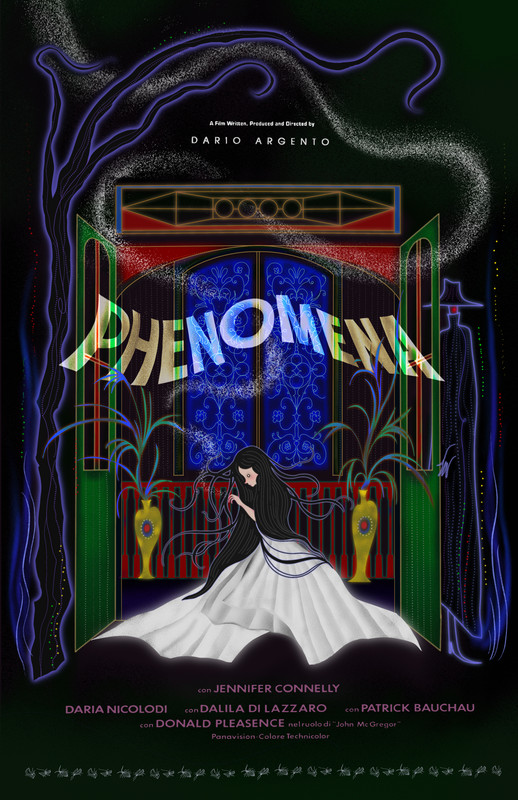
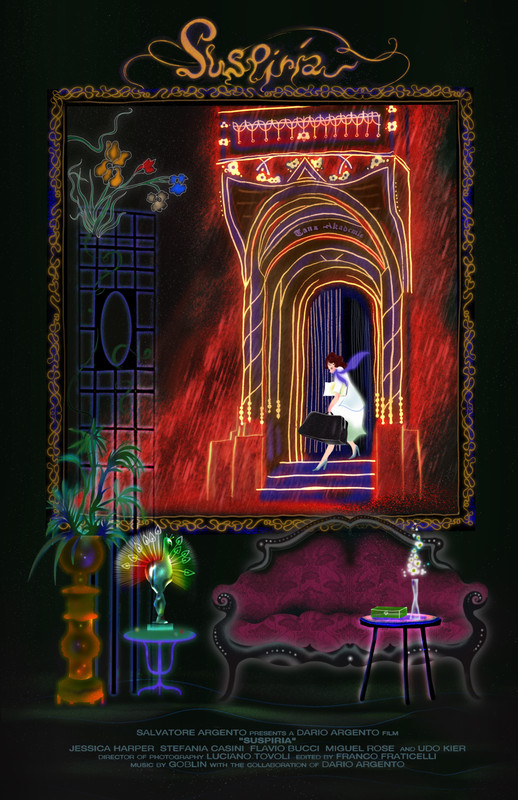
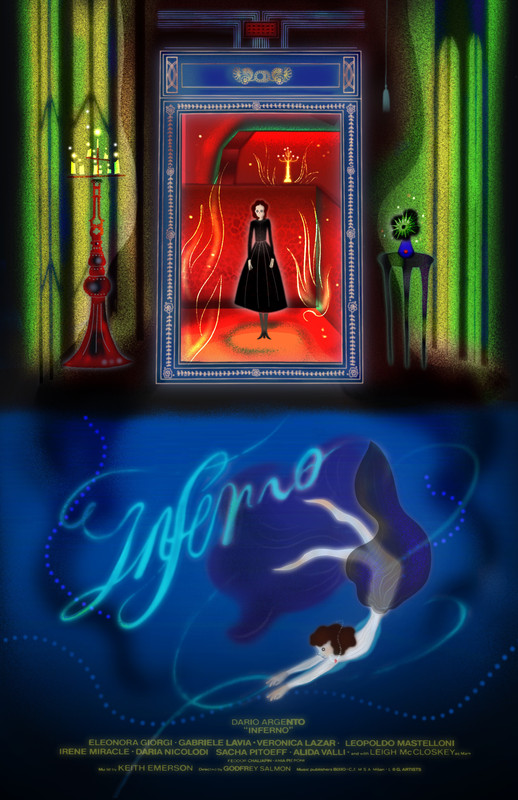
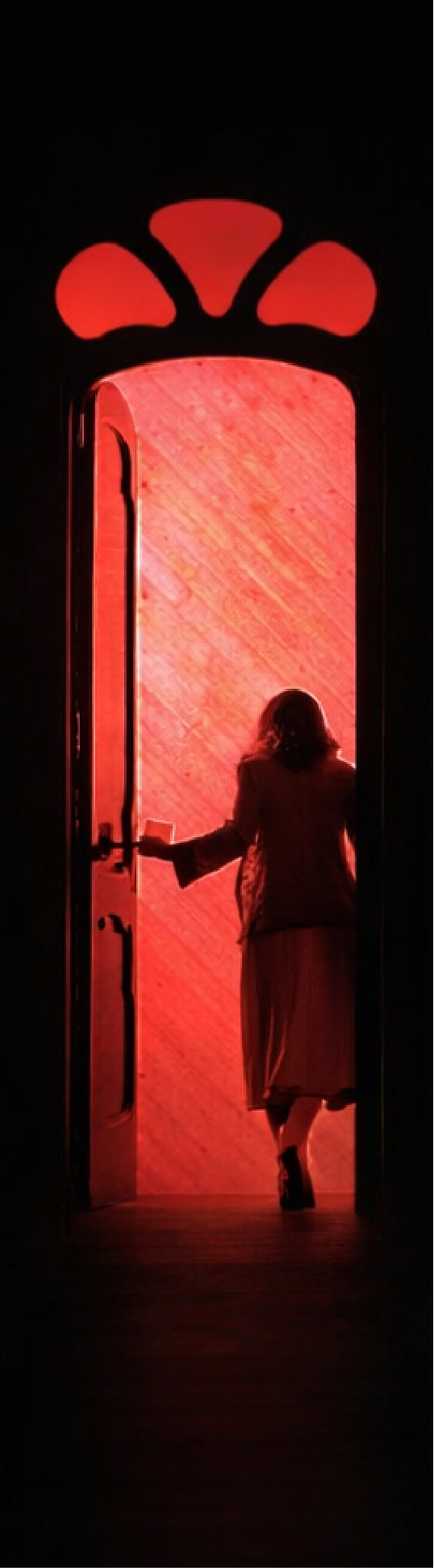
I fell in love with Argento during an undergraduate illustration class. We were assigned to choose a film from a horror list and design a poster. I have always been the kind of person who is both timid and irresistibly drawn to horror—afraid to look, yet unable to look away. When I discovered Argento, I was immediately struck by his aesthetic. It wasn't just frightening; it was beautiful. The violence was choreographed like ballet. The colors felt irrational yet precise. The fear was theatrical, almost painterly. Designing that poster became more than a class project. It was the first time I realized that horror could be a language of color, typography, and composition—not just narrative. Argento showed me that terror could be stylized, sensual, and strangely elegant.
I am deeply grateful to the teacher who introduced me to his work. That encounter shaped not only my taste in cinema, but also my understanding of visual storytelling. Below, I include the poster I created at that time—a small personal tribute to a filmmaker whose images continue to haunt and inspire me.

-01.avif)
-02.jpg)
-03.avif)

-01.jpg)
-02.jpg)
-03.jpg)
-04.jpg)
-01.jpg)
-02.jpg)
-03.jpg)
-01.jpg)
-02.png)
-03.jpg)
-04.jpg)